
Quick answer: Water bottle logo printing should be selected according to the bottle material, surface finish, artwork, colour count, required durability and order quantity. Laser engraving creates a permanent mark on suitable metal surfaces. Screen printing suits simple spot-colour graphics, while heat transfer and water-transfer decals can reproduce more complex artwork. Buyers should approve the actual decoration on the final bottle finish before mass production.
This guide is for distributors, private-label brands, promotional product companies and corporate buyers comparing branding methods for bulk drinkware. It explains how to choose a process, prepare artwork and approve samples without treating the lowest decoration charge as the only decision.
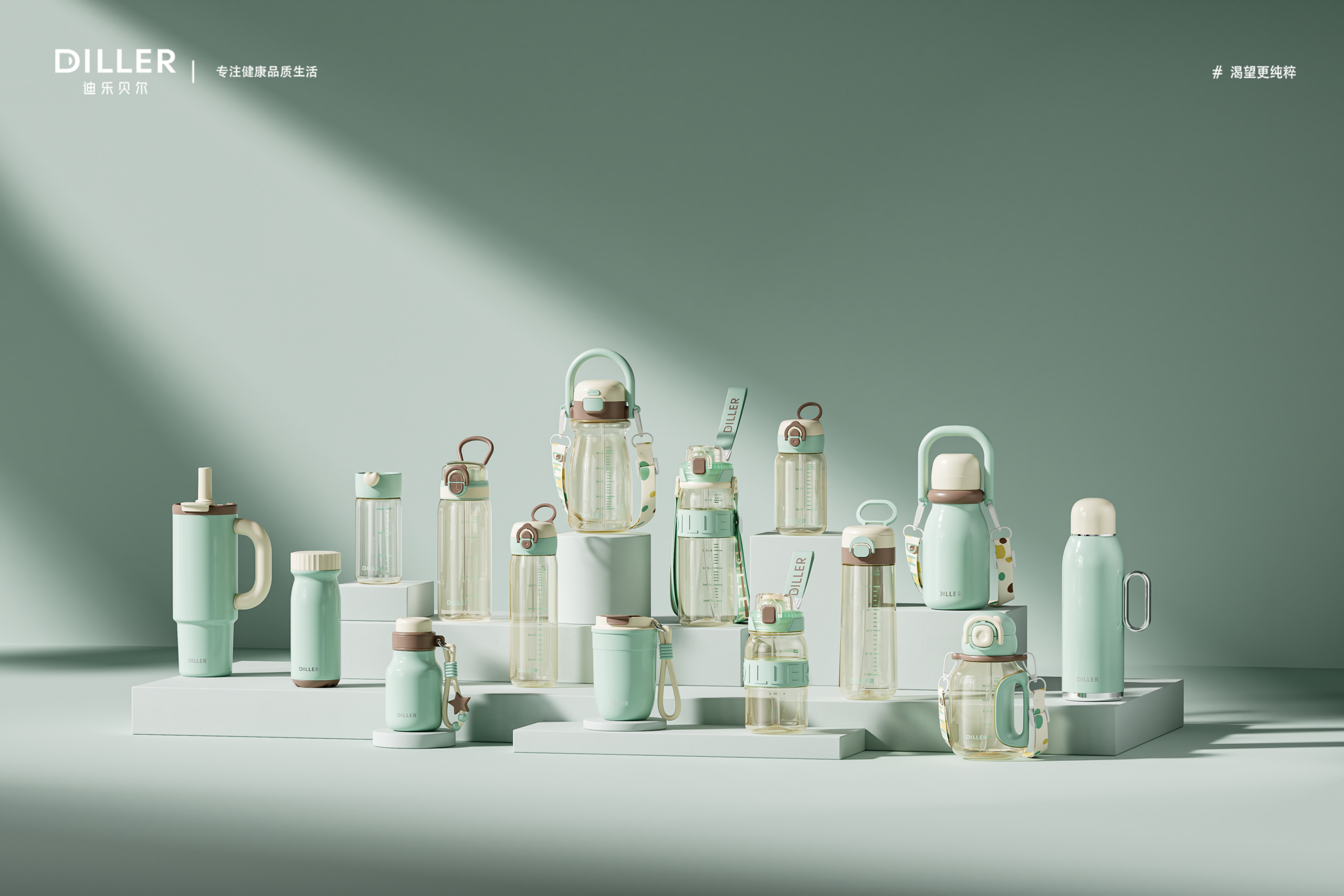
Water bottle logo printing key takeaways
- Choose the decoration process after confirming the bottle material and final surface coating.
- Use vector artwork and define size, position, orientation and colour references in writing.
- Laser, screen printing, transfer printing and decals solve different design problems.
- A digital mock-up is useful for placement, but a physical sample is the production reference.
- Durability must be tested on the complete decorated bottle, not assumed from the process name.
How should buyers select a water bottle logo printing method?
The correct method is the one that can reproduce the approved artwork consistently on the intended bottle surface under the product’s expected conditions of use. Start with the substrate and coating. Stainless steel, powder coating, plastic, silicone, glass and ceramic-coated surfaces do not respond identically to heat, ink, pressure or laser energy.
Next, review the artwork. A single-colour wordmark has different requirements from a photographic gradient, wraparound pattern or individually named gift. Finally, define the performance expectation. A promotional event bottle and a daily-use retail collection may require different abrasion, dishwasher and chemical-resistance testing.
Water bottle logo printing methods compared
| Method | Best suited to | Main strength | Key approval point |
|---|---|---|---|
| Gravure au laser | Suitable metal bodies and some coated finishes | Permanent, precise mark without added ink | Contrast and engraving effect on the actual finish |
| Sérigraphie | Simple logos and limited spot colours | Efficient, recognisable branding on suitable areas | Ink adhesion, edge definition and colour |
| Transfert de chaleur | Multi-colour graphics and broader decoration areas | Detailed colour reproduction | Artwork distortion, seam and adhesion |
| Water-transfer decal | Complex shapes, patterns and curved surfaces | Can cover areas that are difficult for flat printing | Film edge, position and protective finish |
| Impression UV | Detailed graphics on compatible surfaces | Fine detail and variable colour | Surface preparation and abrasion resistance |
| Embossing or moulded logo | Custom plastic, silicone or tooling projects | Logo becomes part of the component | Tooling, draft, depth and cleanability |
No method is automatically premium in every situation. Laser engraving may look understated and durable, yet it cannot reproduce every brand colour. A transfer process may reproduce complex artwork, although it introduces more variables in film, heat, position and finish. The buyer should compare the finished result, not only the process name.
Consequently, water bottle logo printing should be quoted against one approved decoration brief. A method-level price without artwork size, colour count and surface information is not a comparable offer.
Laser engraving for insulated metal bottles
Laser engraving removes or alters the surface to create a controlled mark. It works well for text, serialisation, line graphics and logos where colour matching is not required. However, the visual result depends on the metal, coating thickness, laser settings and artwork detail.
Ask the supplier to confirm whether the mark exposes metal, changes the coating colour or produces another effect. Very thin lines and small reversed text may lose definition. Therefore, the approved sample should establish the acceptable contrast, edge quality and position.
Screen printing for simple custom bottle logos
Screen printing is often practical for one or a few spot colours on a suitable print area. It can produce strong brand visibility without covering the complete bottle. Nevertheless, curved bodies, tapered walls, textured powder coating and seams can limit the usable area.
Define the ink system, pre-treatment and curing process for the selected substrate. Moreover, test the finished decoration for adhesion and abrasion. A process that works on smooth stainless steel may need adjustment on a textured coating or plastic component.
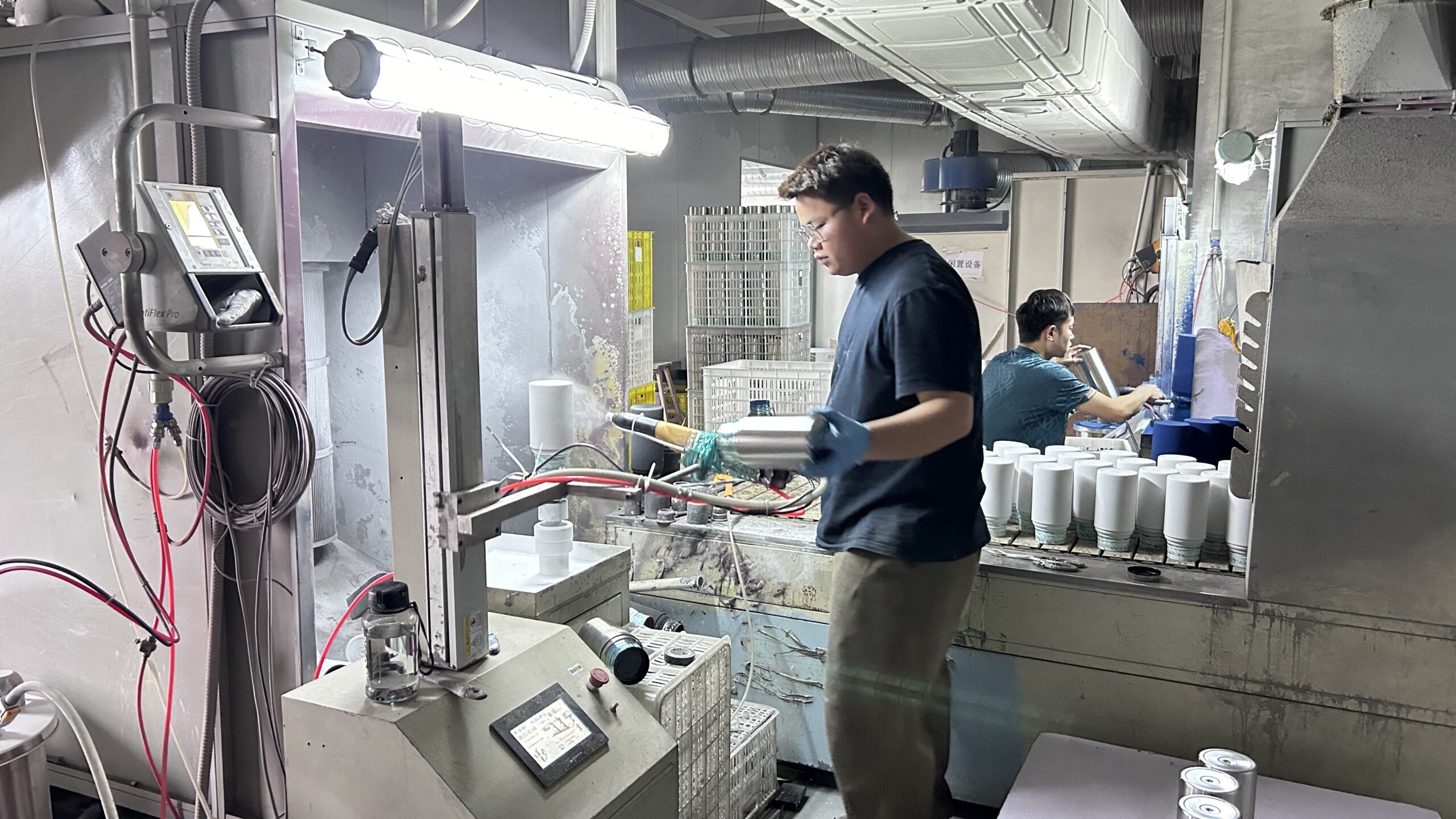
Transfer and decal methods for detailed graphics
Heat-transfer and water-transfer processes are useful when the artwork contains multiple colours, gradients or a larger pattern. They can also support decoration around curved areas. However, the artwork may stretch or change visually when transferred from a flat file to a three-dimensional bottle.
Review where the pattern begins and ends, how it aligns with the lid and handle, and whether a visible seam is acceptable. The protective top layer, curing conditions and intended washing method should also form part of the approval specification.
Prepare artwork and colour references
Supply editable vector artwork where possible, with fonts converted to outlines. Record the logo width and height in millimetres, the distance from a stable reference point and the viewing orientation when the lid is closed. If the bottle has a handle, straw or front face, define which direction is considered the front.
For spot colours, specify the appropriate Pantone reference and provide a physical reference when colour is critical. Pantone explains that colour appearance changes across materials and finishes. Consequently, an on-screen colour or a code alone cannot guarantee an identical result on powder coating, ink, silicone and packaging.
- vector logo file and approved version;
- logo dimensions and print location;
- Pantone or other agreed colour reference;
- minimum line width and text size;
- front orientation and distance from edges;
- acceptable colour and position tolerance;
- required personalisation or variable data.
Approve the logo on the actual bottle
A digital rendering can confirm approximate scale and placement. It cannot prove ink adhesion, laser contrast, film edges, gloss, texture or real colour. For that reason, approve a decorated physical sample made with the intended bottle material and finish whenever the visual or durability risk is material.
Photograph the sample, identify its SKU, artwork version, colour, process and approval date, then retain a reference. If the buyer approves only part of the sample, record that limitation. For example, a print-position sample does not automatically approve the bottle’s leakage or thermal performance.
Inspect water bottle logo printing in bulk production
Bulk inspection should compare production with the approved sample and written artwork specification. Review the logo under consistent lighting and at an agreed viewing distance. In addition, check both appearance and basic adhesion according to a method agreed before production.
The water bottle logo printing record should identify the production batch, artwork version and inspected quantity so that any corrective action can address the right goods.
| Inspection point | What to check | Typical defect risk |
|---|---|---|
| Position | Height, rotation and alignment | Logo appears tilted or off-centre |
| Colour | Approved physical reference and tolerance | Batch or component mismatch |
| Edges | Line definition and complete coverage | Blur, pinholes or missing ink |
| Surface | Scratches, contamination and film edge | Visible rework or poor preparation |
| Adhesion | Agreed rub, tape or wash method | Peeling or premature wear |
| Artwork | Correct version, spelling and orientation | Wrong logo or obsolete file |
Decoration applied away from the drinking surface still needs a product-specific compliance review. The U.S. Food and Drug Administration notes that colourants, adhesives and other substances applied to packaging surfaces can fall within food-contact considerations depending on their use. Buyers should review the complete article and intended conditions, not assume that every ink is suitable for every bottle.
How Diller manages custom bottle branding
Diller supports laser engraving, screen printing, water-transfer, heat-transfer and other project-specific decoration options. The recommended route begins with the selected SKU, surface finish and artwork rather than a generic logo price. This helps the buyer compare achievable appearance, sample needs and production controls.
For new projects, Diller can connect product selection, 2D or 3D design, sample development, packaging and mass-production review through its brand + supply chain + factory model. Buyers should request a project quotation because process, colour count, decoration area, quantity and quality standard all affect the final scope.
Frequently asked questions
Which water bottle logo printing method is most durable?
Laser engraving creates a permanent mark on suitable surfaces, but “most durable” depends on the substrate, coating and required appearance. Printed methods can also perform well when surface preparation, ink, curing and protective finish are correctly specified and tested on the finished bottle.
Can a full-colour logo be printed on an insulated bottle?
Yes, on compatible surfaces using processes such as heat transfer, water-transfer decal or UV printing. The best choice depends on artwork detail, bottle shape, decoration area and durability target. Approve a physical sample because gradients and colours can change across materials and finishes.
What artwork file should a buyer provide?
An editable vector file is preferred for most logos. Convert fonts to outlines and include the approved logo version, dimensions, print location and colour references. High-resolution raster artwork may be needed for photographic graphics, but the supplier should confirm resolution and colour requirements.
Does a logo sample approve the whole product?
No. A decoration sample proves only the items recorded in its approval scope. Leakage, thermal performance, materials, packaging and other functions require separate specifications and acceptance checks.
Choose the method by evidence, not by name
Water bottle logo printing works best when the buyer defines the surface, artwork, position, colour, performance and inspection method before production. Compare real decorated samples, document the approved version and inspect bulk output against the same reference. This approach protects brand consistency while allowing the supplier to recommend the process that fits the product.
Review Diller’s collections de bouteilles d'eau, explore our custom product development service, read the sample approval checklist, ou discuss a logo project with Diller.