
簡潔な回答: 断熱食品ジャーの卸売購入者は、使用可能容量、口径、内側材質、蓋とガスケット、圧力解放機能、スプーン、漏れ、保温試験方法、洗浄アクセス、包装を含む、完全な食事システムを評価すべきです。供給業者が初期温度、経過時間、周囲条件、許容最終温度を明記しない限り、長い保温性能の主張は意味を持ちません。.
本ガイドは、保温食品容器を大量調達する輸入業者、卸売業者、学校・職場の供給業者、プライベートブランド、企業購買担当者向けです。断熱食品ジャーを単なる大型水筒として扱うのではなく、測定可能な性能とユーザーエクスペリエンスに焦点を当てています。.
保温食品瓶卸売の要点
- 想定される食事とユーザーグループに応じて容量と口元サイズを選ぶ。.
- ステンレス容器だけでなく、食品接触部品すべてを確認してください。.
- 定義された温度と時間を指定した書面による保温テスト方法を使用する。.
- 開封力、圧力解放、漏れ、洗浄アクセスを確認してください。.
- スプーン、蓋のボウル機能、ラベル、包装を瓶と一緒に承認する。.
バイヤーは保温食品ジャーをどのように選ぶべきですか?
断熱食品ジャーは、想定する食品、分量、食事場所、ユーザーの器用さ、洗浄方法に基づいて選択してください。. スープ、ご飯、パスタ、お粥、ミックスミールは容器と異なる相互作用をします。狭いボトル口は効果的に熱を保持するかもしれませんが、食事と洗浄の利便性を低下させる可能性があります。.
子供、通勤者、屋外利用者、機関向けプログラムでは、ジャーの持ち運び、開封、洗浄方法を確認してください。さらに、緩んだ部品が交換可能か、輸送中にスプーンが固定されたままかどうかも確認してください。.
保温食品ジャーの卸売仕様書を作成する
| 仕様エリア | 定義すべき項目 | 購入理由 |
|---|---|---|
| 容量 | 公称内容量と実用内容量 | 食事のサイズとヘッドスペースを合わせる |
| 開封 | 内部口径 | 食事、詰め込み、洗浄アクセス |
| 内側本体 | 材質グレードと仕上げ | 食品接触範囲と耐久性 |
| 蓋システム | ねじ、内栓、ボウル、圧力機能 | 漏れと開封体験 |
| シール | 材質、寸法およびスペア品の入手可能性 | 漏れ防止とアフターサービス |
| アクセサリー | スプーンまたはフォークの材質と収納 | 完全なユーザー体験 |
| 保温目標 | 試験方法と受入温度 | 同等の性能を示す証拠 |
| Packaging | 保護、指示書、ラベルおよび外箱 | 輸送と市場準備 |
承認された仕様はバージョン番号とともに記録してください。供給業者が一つのモデル名で複数の蓋、シール、スプーンのオプションを提供する場合、注文書には正確な組み合わせを明記すべきです。.
保温食品ジャーの卸売仕様書は、販売クレーム、包装、検査チームが異なる製品仮定を使用することを防ぎます。.
容量と口元を一緒に選ぶ
容量だけでは使い勝手は決まりません。コンパクトなジャーは子供用の食事や副菜に適し、大きめのジャーは大人の昼食や共有利用に適しています。ただし、開口部、底面形状、またはスプーンの設計によって最後の一口が取りづらい場合、名目上の大きな容量は実用的ではありません。.
サンプルの口径と内部の深さを測定してください。その後、代表的な食品を用いて詰め込み、食事、洗浄をシミュレーションします。この実践的な確認は、カタログ写真以上の情報を明らかにすることがよくあります。.
繰り返し可能な保温性能試験の定義
「12時間食品を温かく保つ」といった記載は、条件なしでは不完全です。保温性能は、内容量、初期温度、食品の種類、予熱、周囲温度、開封頻度、蓋の設計によって変化します。購入者は繰り返し可能な方法を定義し、同じ装置を用いてサンプルを比較すべきです。.
- Condition the jar and test environment consistently.
- Record whether the jar is preheated and for how long.
- Use a defined liquid or food simulant and fill volume.
- Measure and record the starting temperature.
- Close the complete lid system according to instructions.
- Record the ambient temperature and elapsed time.
- Measure the final temperature at the defined location.
- Compare the result with the written acceptance criterion.
The result applies only to the tested method. It should not be turned into a universal consumer promise without reviewing intended use and local claim requirements.
Test the lid, gasket and pressure behaviour
Hot contents can change the pressure inside a sealed jar and make the lid harder to open. The lid design, thread, seal and any pressure-release feature influence the user experience. Test opening after the agreed hot-fill and hold conditions with representative users.
For leakage, specify fill level, liquid temperature, orientation, duration and movement. A jar that remains upright on a desk faces a different risk from one carried in a school bag. Inspect the gasket for correct installation, compression and odour, and confirm whether replacements are available.
Evaluate cleaning and hygiene by design
Food residues can remain in threads, deep corners, seals and accessory compartments. The buyer should be able to remove and reinstall washable components without damaging them. Care instructions should state whether hand washing or dishwasher use is permitted for each part.
Inspect the surface after repeated cleaning according to the proposed instructions. Look for trapped residue, persistent odour, seal distortion, coating change, corrosion or water retained inside the lid assembly.
Verify materials and food-contact documentation
Food-contact review covers the inner body, lid, gasket, spoon and any coating or printed area that may contact food. The U.S. Food and Drug Administration describes food-contact safety according to the substance and conditions of use. In the European Union, the general framework is Regulation (EC) No 1935/2004, with additional measures applying to specific materials.
Match every report to the ordered model, material, colour and intended hot-food conditions. A test report for a cold-water bottle or a different plastic component may not support a food jar used with hot, oily or acidic meals.
Consequently, insulated food jar wholesale documentation must reflect the intended food types and temperatures rather than a generic bottle file.
| Quality check | Method to agree | Failure risk |
|---|---|---|
| 漏れ | Fill, temperature, orientation and duration | Bag or carton contamination |
| 熱性能 | Controlled start, hold and final temperature | Unsupported product claim |
| Opening force | Hot-fill hold and user test | Lid cannot be opened safely |
| 外観 | 承認済みサンプルおよび不良カタログ | Dents, scratches or print variation |
| 臭い | Conditioning and controlled evaluation | Negative food experience |
| Packaging | Drop, vibration or agreed transit check | Damage before sale |
Diller 520 ml insulated food jar example
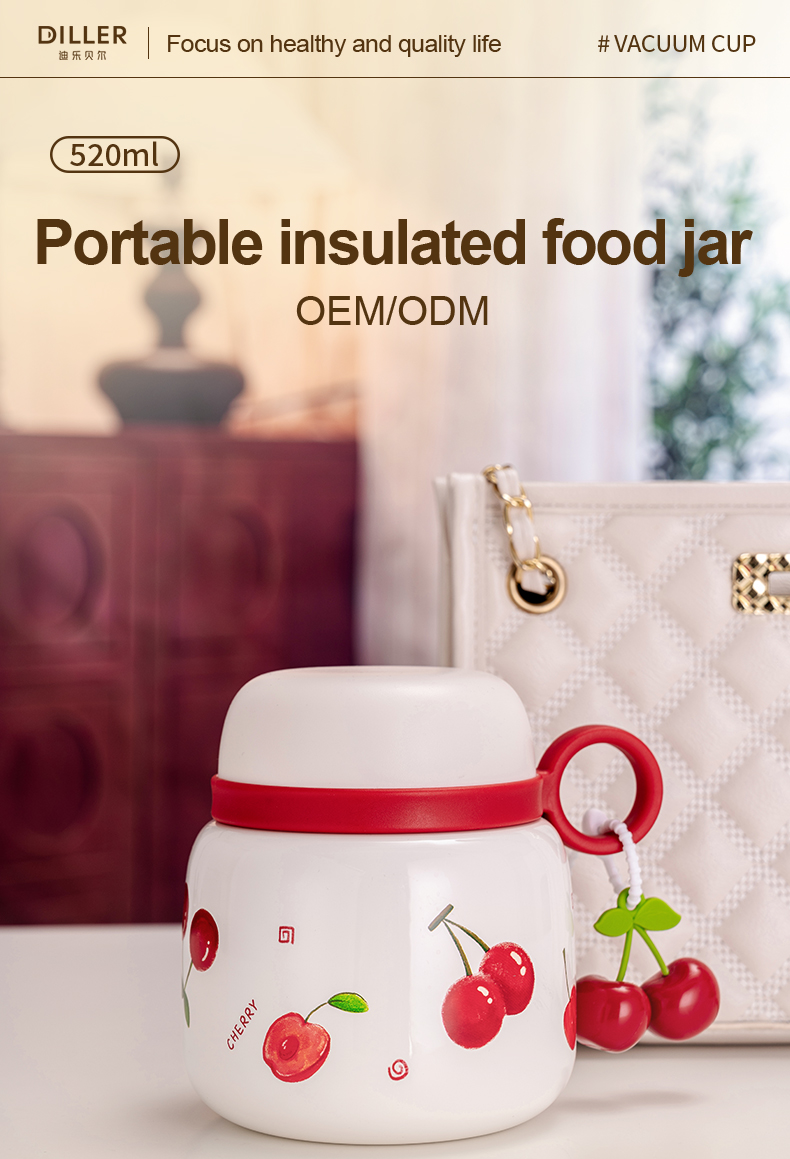
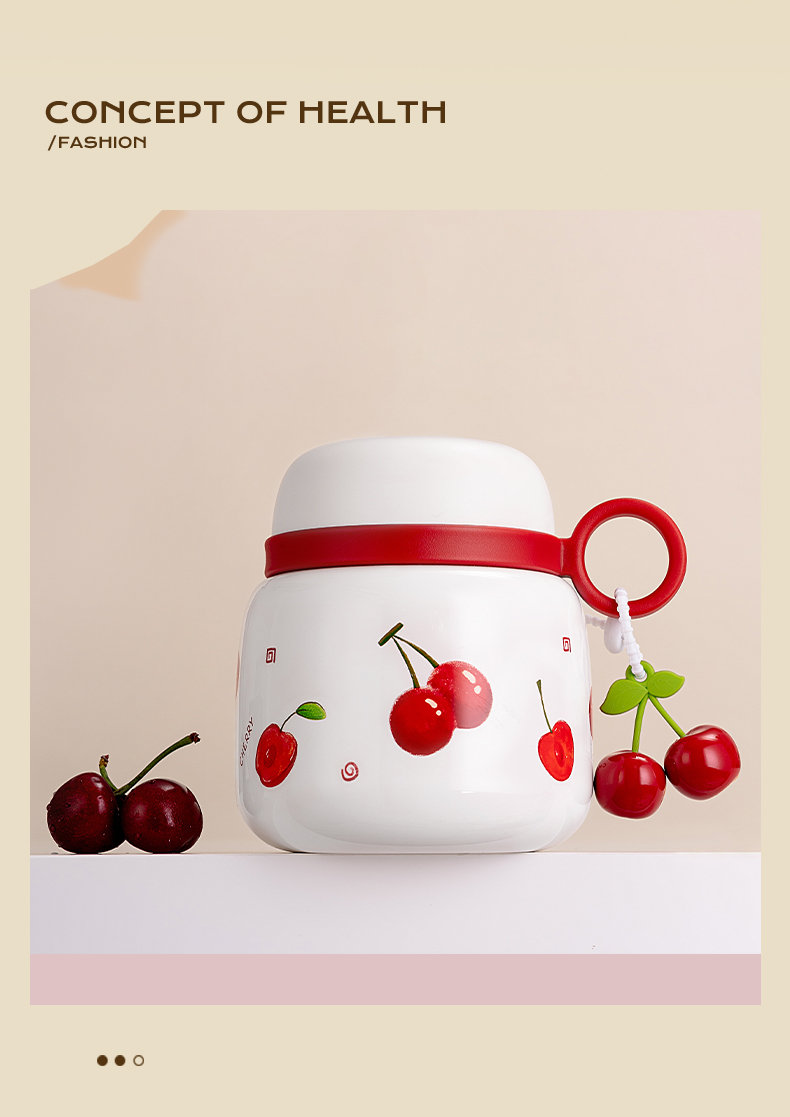
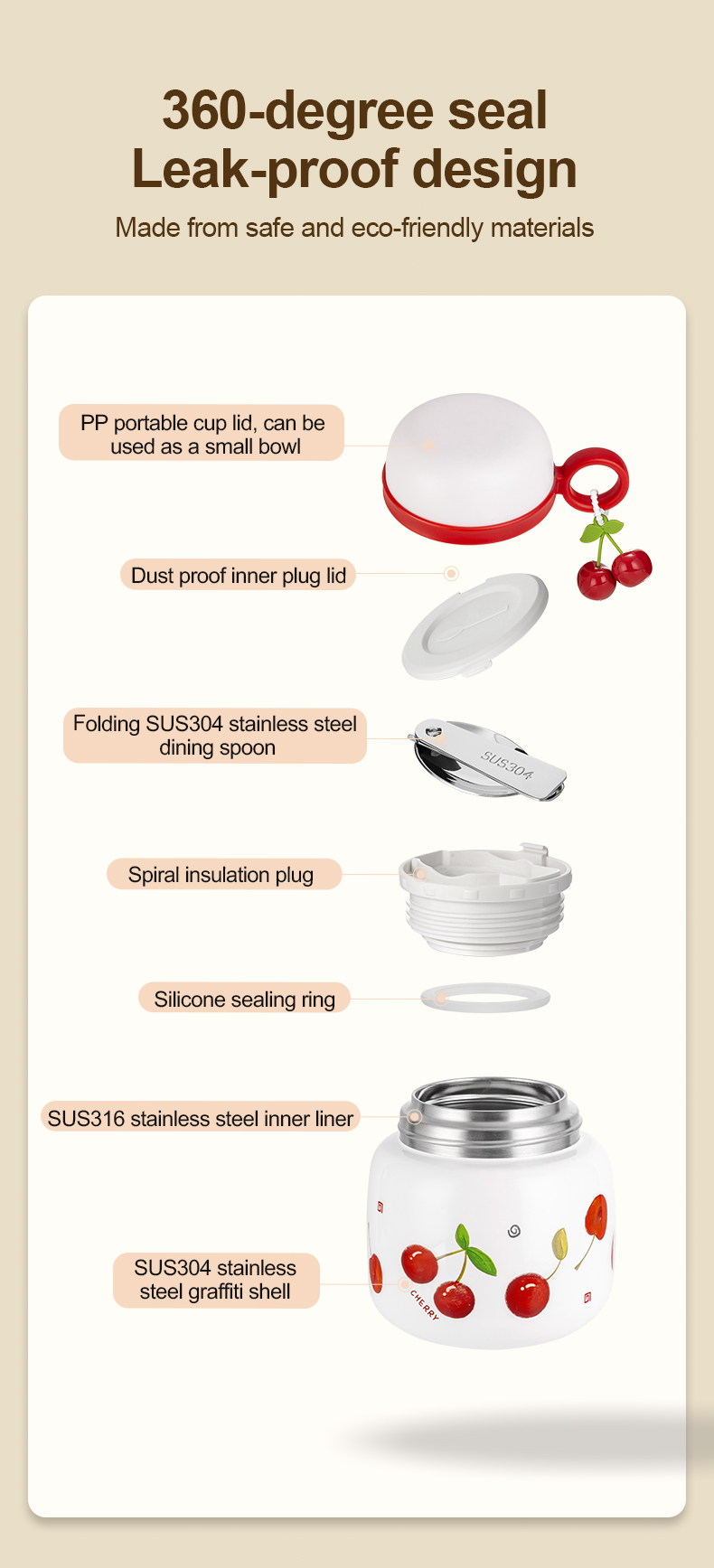
Diller’s 520 ml MLH9215 food jar is presented with a stainless steel inner container, wide opening, spoon and a lid that can support eating use. The compact body and coordinated design make it relevant to lunch, gifting and family-oriented channels. Buyers should verify the current material specification, thermal method, colour mix, packaging, MOQ and applicable documents for each order.
Diller can also coordinate logo, exterior decoration and packaging through its custom development service. The project should retain practical opening, cleaning and sealing performance after any component or decoration change.
Insulated food jar buyer checklist
Complete this insulated food jar wholesale checklist before releasing the final sample and bulk order.
- ☐ Nominal and usable capacity confirmed
- ☐ Mouth diameter and internal depth measured
- ☐ Inner body, lid, seal and spoon materials listed
- ☐ Thermal test method and acceptance result written
- ☐ Leakage test reflects the intended transport use
- ☐ Hot-fill opening and pressure behaviour tested
- ☐ Cleaning method and removable parts approved
- ☐ Spare seals and accessories discussed
- ☐ Decoration and packaging sample signed
- ☐ Destination-market documentation reviewed
よくある質問
What capacity is best for insulated food jar wholesale orders?
There is no universal best capacity. Select it according to the meal, user age, portion, carrying method and range position. Test usable capacity and eating access rather than relying only on the nominal millilitre value.
How should heat retention be compared?
Use the same jar conditioning, fill volume, starting temperature, ambient temperature, elapsed time and measurement location. Record all values. Results from different methods should not be compared as if they were equivalent.
Can a food jar be used for cold meals?
Many vacuum-insulated food jars can also slow heat transfer for cold contents. However, the supplier should confirm the intended use, and the buyer should test the complete product under representative conditions.
What is the most important lid check?
Leakage and opening behaviour are both critical. Test the jar after hot filling and holding because internal pressure and gasket compression can affect opening. Also confirm that the user can remove, clean and reinstall the seal correctly.
Approve the complete eating experience
Insulated food jar wholesale selection should connect measurable thermal performance with realistic eating, carrying and cleaning. Define the jar, lid, seal, spoon and packaging as one system, then verify materials and approve a repeatable test plan. This produces a stronger product than relying on capacity and an unsupported hour claim.
View the Diller 520 ml food jar, browse the complete product collection, 、当社の quality control frameworkあるいは request a food jar quotation and sample.