
Быстрый ответ: Insulated food jar wholesale buyers should evaluate the complete eating system: usable capacity, mouth diameter, inner material, lid and gasket, pressure release, spoon, leakage, thermal test method, cleaning access and packaging. A long insulation claim is not meaningful unless the supplier states the starting temperature, elapsed time, ambient conditions and acceptable final temperature.
This guide is for importers, distributors, school and workplace suppliers, private-label brands and corporate buyers sourcing thermal food containers in bulk. It focuses on measurable performance and user experience rather than treating an insulated food jar as a larger water bottle.
Insulated food jar wholesale key takeaways
- Choose capacity and mouth size according to the intended meal and user group.
- Verify every food-contact component, not only the stainless steel container.
- Use a written thermal test method with defined temperatures and timing.
- Check opening force, pressure release, leakage and cleaning access.
- Approve the spoon, lid-as-bowl function, labels and packaging with the jar.
How should buyers select an insulated food jar?
Select an insulated food jar by the intended food, portion, eating location, user dexterity and cleaning method. Soup, rice, pasta, porridge and mixed meals interact differently with a container. A narrow bottle mouth may retain heat effectively but make eating and washing less convenient.
For children, commuters, outdoor users and institutional programmes, review how the jar is carried, opened and cleaned. Moreover, check whether loose parts can be replaced and whether the spoon remains secure during transport.
Create an insulated food jar wholesale specification
| Specification area | Что определить | Buyer reason |
|---|---|---|
| Емкость | Nominal and usable fill volume | Match meal size and headspace |
| Opening | Internal mouth diameter | Eating, filling and cleaning access |
| Inner body | Material grade and finish | Food-contact scope and durability |
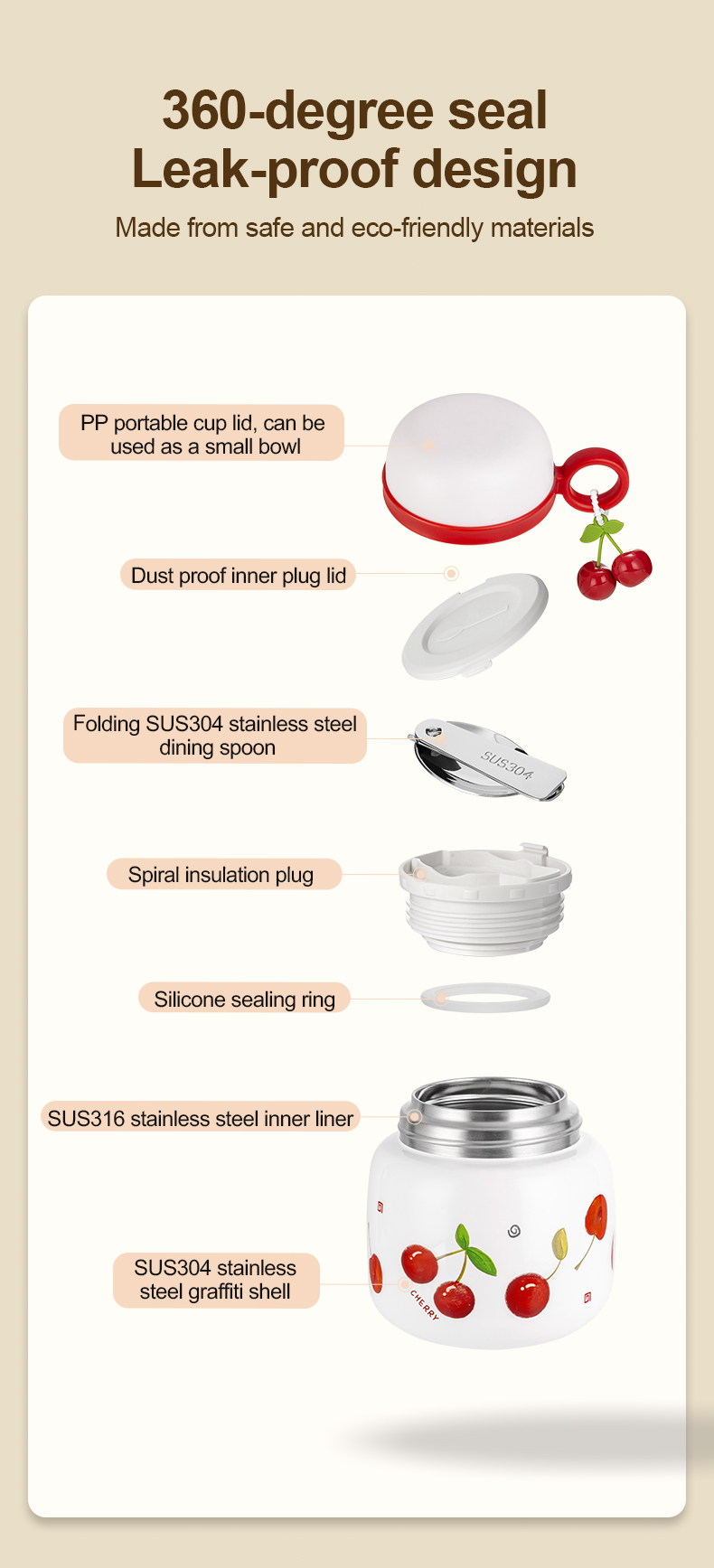
| Lid system | Thread, inner plug, bowl and pressure feature | Leakage and opening experience |
| Seal | Material, dimensions and spare availability | Leak control and after-sales service |
| Accessory | Spoon or fork material and storage | Complete user experience |
| Thermal target | Test method and acceptance temperature | Comparable performance evidence |
| Packaging | Protection, instructions, label and carton | Transit and market readiness |
Record the approved specification with a version number. If a supplier offers several lid, seal or spoon options under one model name, the purchase order should identify the exact combination.
An insulated food jar wholesale specification also prevents sales claims, packaging and inspection teams from using different product assumptions.
Choose capacity and opening together
Capacity alone does not determine usability. A compact jar may suit a child-sized meal or side dish, while a larger jar may suit an adult lunch or shared use. However, a large nominal volume is not useful if the opening, base shape or spoon makes the last portion difficult to reach.
Measure the mouth and internal depth on the sample. Then simulate filling, eating and washing with representative food. This practical check often reveals more than a catalogue photograph.
Define a repeatable thermal performance test
A statement such as “keeps food hot for 12 hours” is incomplete without conditions. Heat retention changes with fill volume, starting temperature, food type, preheating, ambient temperature, opening frequency and lid design. Buyers should define a repeatable method and compare samples using the same equipment.
- Condition the jar and test environment consistently.
- Record whether the jar is preheated and for how long.
- Use a defined liquid or food simulant and fill volume.
- Measure and record the starting temperature.
- Close the complete lid system according to instructions.
- Record the ambient temperature and elapsed time.
- Measure the final temperature at the defined location.
- Compare the result with the written acceptance criterion.
The result applies only to the tested method. It should not be turned into a universal consumer promise without reviewing intended use and local claim requirements.
Test the lid, gasket and pressure behaviour
Hot contents can change the pressure inside a sealed jar and make the lid harder to open. The lid design, thread, seal and any pressure-release feature influence the user experience. Test opening after the agreed hot-fill and hold conditions with representative users.
For leakage, specify fill level, liquid temperature, orientation, duration and movement. A jar that remains upright on a desk faces a different risk from one carried in a school bag. Inspect the gasket for correct installation, compression and odour, and confirm whether replacements are available.
Evaluate cleaning and hygiene by design
Food residues can remain in threads, deep corners, seals and accessory compartments. The buyer should be able to remove and reinstall washable components without damaging them. Care instructions should state whether hand washing or dishwasher use is permitted for each part.
Inspect the surface after repeated cleaning according to the proposed instructions. Look for trapped residue, persistent odour, seal distortion, coating change, corrosion or water retained inside the lid assembly.
Verify materials and food-contact documentation
Food-contact review covers the inner body, lid, gasket, spoon and any coating or printed area that may contact food. The U.S. Food and Drug Administration describes food-contact safety according to the substance and conditions of use. In the European Union, the general framework is Regulation (EC) No 1935/2004, with additional measures applying to specific materials.
Match every report to the ordered model, material, colour and intended hot-food conditions. A test report for a cold-water bottle or a different plastic component may not support a food jar used with hot, oily or acidic meals.
Consequently, insulated food jar wholesale documentation must reflect the intended food types and temperatures rather than a generic bottle file.
| Quality check | Method to agree | Failure risk |
|---|---|---|
| Leakage | Fill, temperature, orientation and duration | Bag or carton contamination |
| Thermal performance | Controlled start, hold and final temperature | Unsupported product claim |
| Opening force | Hot-fill hold and user test | Lid cannot be opened safely |
| Внешний вид | Утвержденный образец и каталог дефектов | Dents, scratches or print variation |
| Odour | Conditioning and controlled evaluation | Negative food experience |
| Packaging | Drop, vibration or agreed transit check | Damage before sale |
Diller 520 ml insulated food jar example
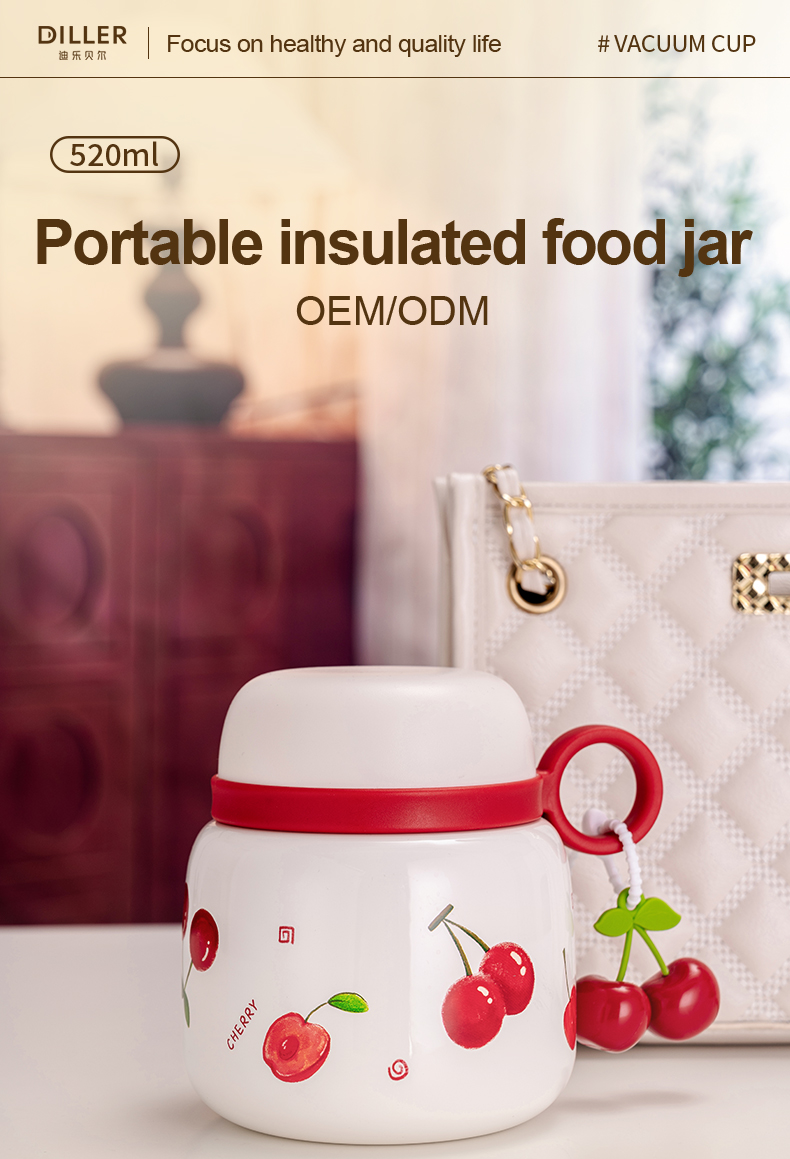
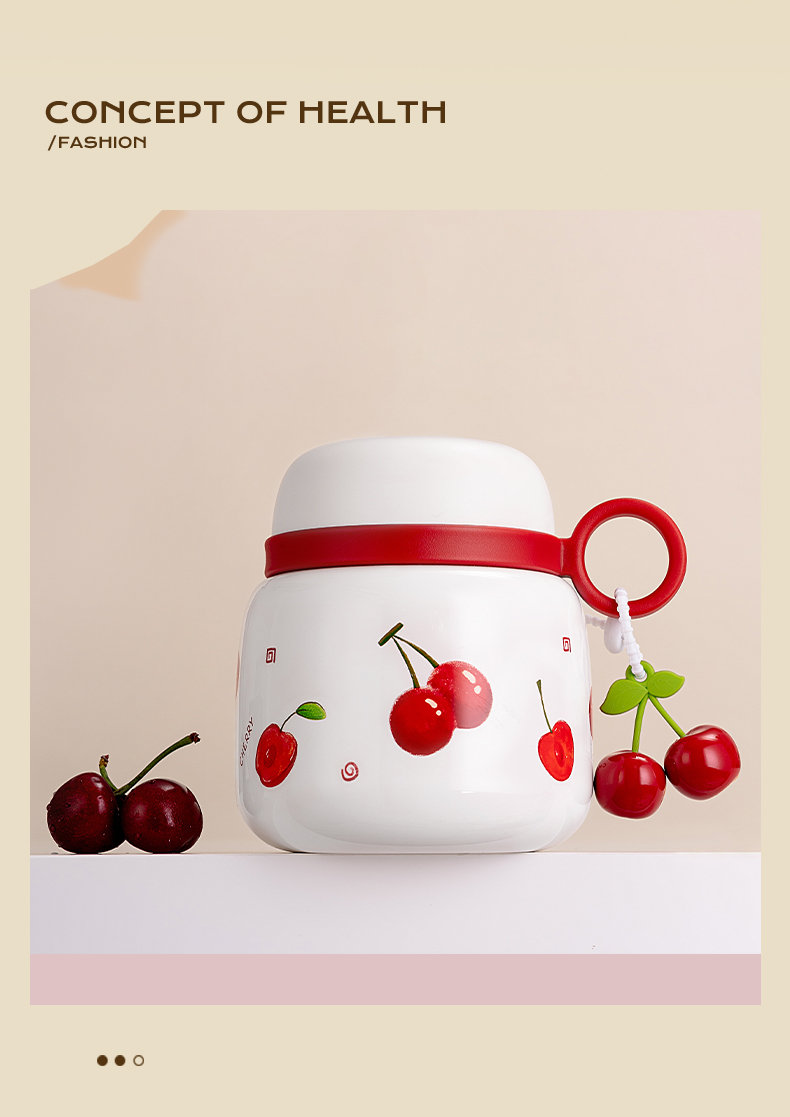
Diller’s 520 ml MLH9215 food jar is presented with a stainless steel inner container, wide opening, spoon and a lid that can support eating use. The compact body and coordinated design make it relevant to lunch, gifting and family-oriented channels. Buyers should verify the current material specification, thermal method, colour mix, packaging, MOQ and applicable documents for each order.
Diller can also coordinate logo, exterior decoration and packaging through its custom development service. The project should retain practical opening, cleaning and sealing performance after any component or decoration change.
Insulated food jar buyer checklist
Complete this insulated food jar wholesale checklist before releasing the final sample and bulk order.
- ☐ Nominal and usable capacity confirmed
- ☐ Mouth diameter and internal depth measured
- ☐ Inner body, lid, seal and spoon materials listed
- ☐ Thermal test method and acceptance result written
- ☐ Leakage test reflects the intended transport use
- ☐ Hot-fill opening and pressure behaviour tested
- ☐ Cleaning method and removable parts approved
- ☐ Spare seals and accessories discussed
- ☐ Decoration and packaging sample signed
- ☐ Destination-market documentation reviewed
Часто задаваемые вопросы
What capacity is best for insulated food jar wholesale orders?
There is no universal best capacity. Select it according to the meal, user age, portion, carrying method and range position. Test usable capacity and eating access rather than relying only on the nominal millilitre value.
How should heat retention be compared?
Use the same jar conditioning, fill volume, starting temperature, ambient temperature, elapsed time and measurement location. Record all values. Results from different methods should not be compared as if they were equivalent.
Can a food jar be used for cold meals?
Many vacuum-insulated food jars can also slow heat transfer for cold contents. However, the supplier should confirm the intended use, and the buyer should test the complete product under representative conditions.
What is the most important lid check?
Leakage and opening behaviour are both critical. Test the jar after hot filling and holding because internal pressure and gasket compression can affect opening. Also confirm that the user can remove, clean and reinstall the seal correctly.
Approve the complete eating experience
Insulated food jar wholesale selection should connect measurable thermal performance with realistic eating, carrying and cleaning. Define the jar, lid, seal, spoon and packaging as one system, then verify materials and approve a repeatable test plan. This produces a stronger product than relying on capacity and an unsupported hour claim.
View the Diller 520 ml food jar, browse the complete product collection, ознакомьтесь с нашими quality control framework, или request a food jar quotation and sample.