
คำตอบสั้น ๆ: Ceramic lined insulated tumbler wholesale sourcing requires buyers to verify what the “ceramic” layer actually is, which material sits beneath it, whether the coating covers the complete beverage-contact area, and how adhesion, appearance, odour, leakage and thermal performance are tested. A ceramic-coated stainless steel bottle is not the same product as a solid ceramic cup, so specifications and claims must be precise.
This guide is written for distributors, importers, private-label brands and corporate buyers evaluating ceramic-coated insulated bottles and tumblers. It explains the product architecture, benefits, trade-offs and approval questions without making unsupported health or taste claims.
Ceramic lined insulated tumbler wholesale key takeaways
- Confirm whether the product uses a ceramic coating over metal or a separate solid liner.
- Request the steel grade, coating system and component-level food-contact documentation.
- Inspect the rim, base radius and transition areas for complete, consistent coating.
- Approve colour, gloss, surface texture, cleaning method and allowable visual limits.
- Test the complete bottle for leakage, thermal performance and coating durability.
What is a ceramic lined insulated tumbler?
A ceramic lined insulated tumbler usually combines a vacuum-insulated metal body with a ceramic or ceramic-like coating applied to the inner beverage-contact surface. The metal structure provides strength and insulation architecture, while the internal surface has different visual and tactile characteristics from bare stainless steel.
Terminology varies between suppliers. Therefore, the specification should state whether the inside is coated stainless steel, a separate insert or another construction. It should also identify the coating manufacturer or system where available, application scope, curing process and intended conditions of use.
Ceramic-coated and stainless steel interiors compared
| ปัจจัยการตัดสินใจ | Ceramic-coated interior | Bare stainless steel interior |
|---|---|---|
| Surface appearance | Can provide a light, coloured or different tactile finish | Metallic appearance |
| Product positioning | Distinctive premium or specialist story | Familiar, broad-market construction |
| Inspection focus | Coverage, adhesion, pinholes, chips and colour consistency | Steel grade, finish, weld area and cleanliness |
| Use instructions | May require coating-specific care guidance | Depends on steel finish and complete product |
| Compliance evidence | Metal substrate plus coating and all other contact parts | Steel plus lid, gasket, straw and other contact parts |
The ceramic surface does not remove the need to specify the metal underneath it. Likewise, a stainless steel description does not prove the compliance of the coating, lid, gasket or straw. Buyers must evaluate the whole material system.
Therefore, a ceramic lined insulated tumbler wholesale quotation should identify both the underlying structure and the applied beverage-contact surface.
Decide whether the category fits the market
Ceramic-coated insulated drinkware can support a premium range when the distributor has a clear customer and product story. It may suit office coffee, tea, gifting or design-led drinkware collections. However, it should not be added simply because the finish is new.
Test whether buyers understand the difference, accept the care instructions and value the design. In addition, compare the item with existing stainless steel products so that it adds a distinct range role rather than duplicating capacity and lid functions.
Verify ceramic coating quality and compliance
Food-contact compliance depends on the exact materials and intended use. The U.S. Food and Drug Administration explains that authorisation and safety assessment depend on the food-contact substance and conditions of use. In the European Union, Regulation (EC) No 1935/2004 provides the general framework for materials and articles intended to contact food.
Ask for documents that match the coating system, colour, substrate and intended beverage conditions. A report for another product, another colour or an unspecified coating may not prove the ordered article.
For ceramic lined insulated tumbler wholesale projects, the compliance file should follow the exact sample approved for mass production.
- coating identity and application scope;
- metal grade beneath the coating;
- lid, gasket, straw and accessory materials;
- applicable market and referenced regulation;
- test conditions, simulants, temperature and duration where relevant;
- laboratory, report date, model and sample description;
- care instructions and use limitations.
Inspect high-risk coating areas
Flat visual areas may look acceptable while edges and transitions reveal process variation. Examine the rim, shoulder, bottom radius, weld-related areas and any place where coating thickness changes. Use stable lighting and rotate the sample to identify pinholes, particles, uneven gloss or incomplete coverage.
Define visual defect limits before production. A tiny colour variation, a pinhole and an exposed metal area are not equivalent risks. The inspection plan should classify defects according to safety, function and customer perception.
Approve a ceramic-coated bottle sample
The approved sample should represent the intended steel, coating, colour, lid, gasket, decoration and packaging. Review both dry appearance and the surface after the agreed cleaning and use simulation. Moreover, confirm that the sample remains free from leakage and meets the written thermal target.
| Approval area | What to record | วิธีการตรวจสอบ |
|---|---|---|
| Interior surface | Colour, gloss, texture and coverage | Approved sample and visual standard |
| Adhesion | Agreed method and acceptance limit | Product-specific test procedure |
| Odour | Conditioning, liquid and evaluation time | Controlled sensory check |
| Leakage | Fill level, orientation and duration | Written functional test |
| Thermal performance | Start temperature, time and environment | Recorded measurement method |
| Cleaning | Permitted method and cycles | Care-instruction validation |
Do not invent a scratch or adhesion test after production. The buyer and supplier should agree on the method, equipment and acceptable result before releasing the purchase order.
Diller ceramic-coated insulated bottle example
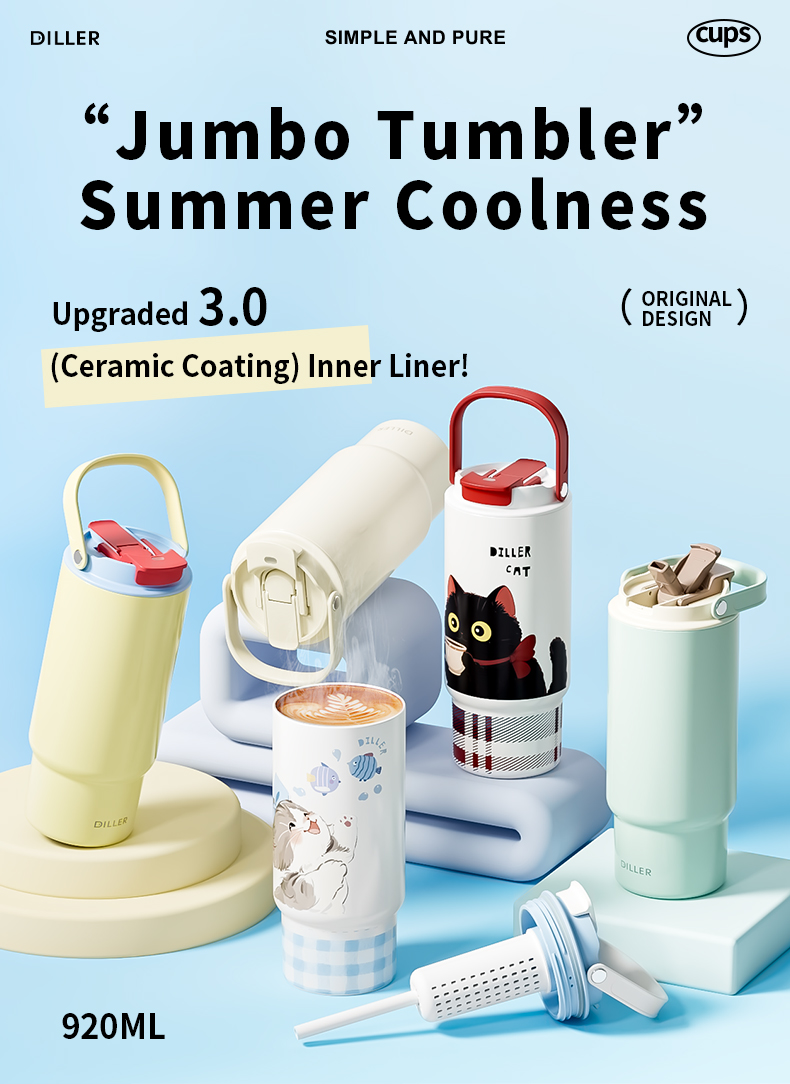
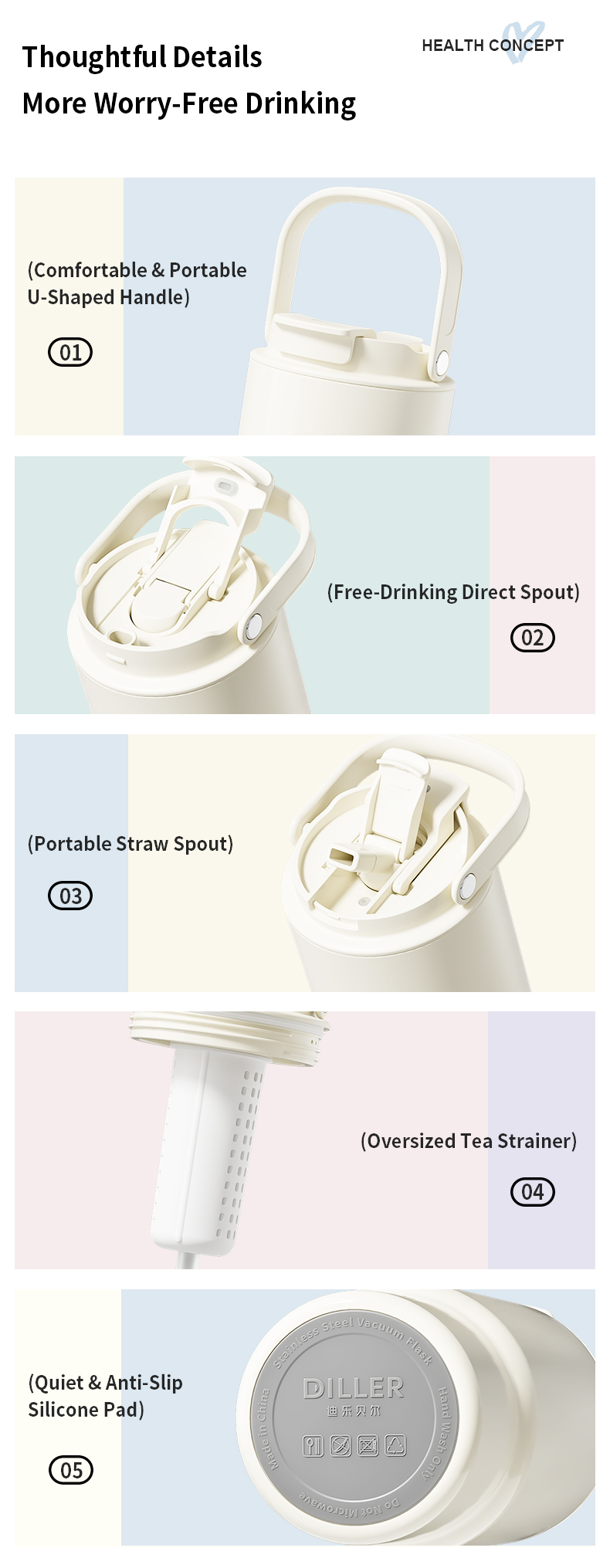
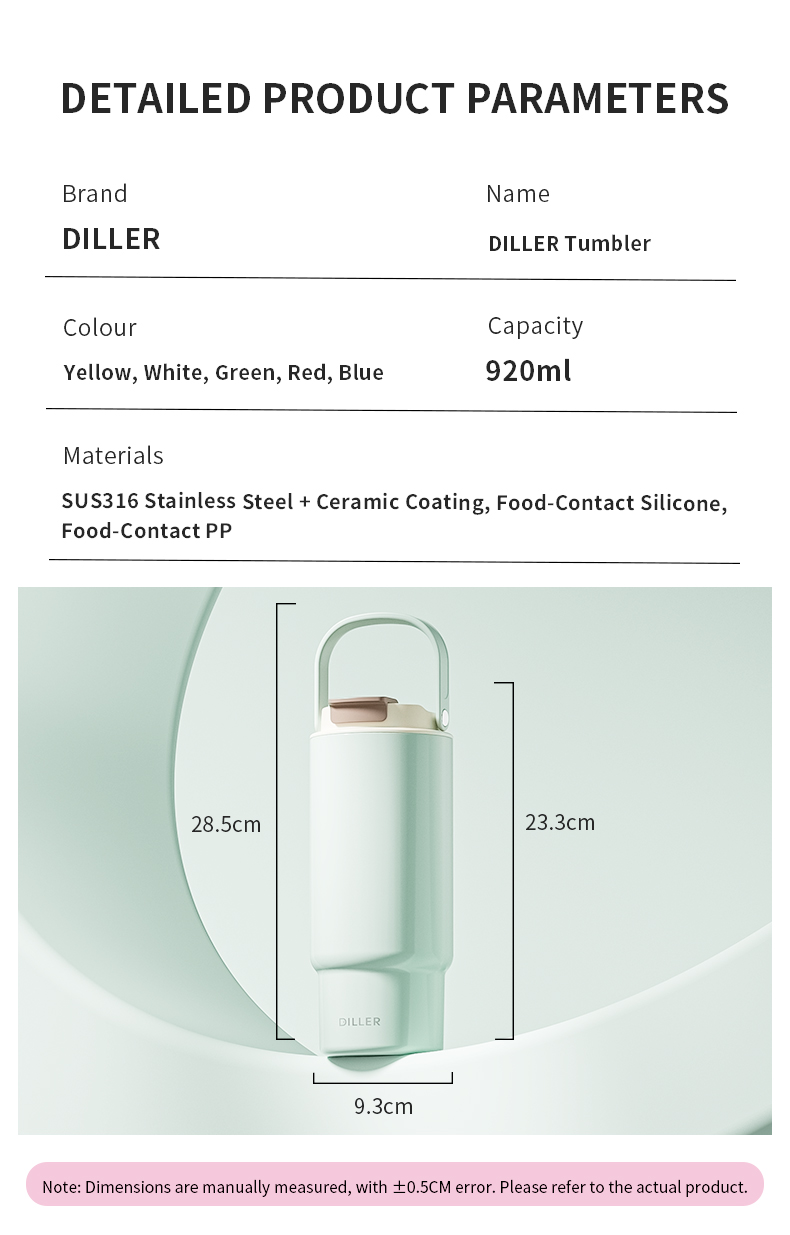
Diller’s D9384-920 is a 920 ml insulated bottle described with a 316 stainless steel body and ceramic-coated beverage surface. Its tall body, carry handle and coordinated colours can support a premium hydration range. Buyers should confirm the current specification, coating details, colour availability, MOQ and applicable reports for the proposed order.
The example illustrates Diller’s innovation-led approach: use an established insulated structure while creating a visibly different interior and product story. The value is not a claim that ceramic is automatically “healthier”; it is the combination of design, selected materials, quality control and market positioning.
Ceramic lined insulated tumbler wholesale checklist
Use this ceramic lined insulated tumbler wholesale checklist before approving a purchase order or production sample.
- ☐ Construction defined as coating, insert or solid liner
- ☐ Steel grade and coating system identified
- ☐ All beverage-contact components listed
- ☐ Market-specific food-contact documents reviewed
- ☐ Rim, radius and transition coverage inspected
- ☐ Appearance limits and defect catalogue approved
- ☐ Leakage and thermal methods written
- ☐ Coating adhesion or durability method agreed
- ☐ Cleaning instructions validated
- ☐ Bulk inspection compares goods with the signed sample
คำถามที่พบบ่อย
Is a ceramic lined insulated tumbler made entirely from ceramic?
Usually not. Many products use a ceramic coating on the inner surface of a metal vacuum-insulated body. Buyers should request a cross-section or material specification because suppliers may use “ceramic lined” and “ceramic coated” differently.
Does ceramic coating change thermal performance?
Thermal performance depends mainly on the complete bottle construction, including vacuum quality, geometry, lid and test conditions. Do not infer a result from the coating name. Approve a written thermal target and test the finished product.
What documents should wholesale buyers request?
Request component-level material information, coating identification, applicable food-contact reports, test conditions, model and colour coverage, plus product specifications and care instructions. Requirements depend on the destination market and intended use.
Can a ceramic-coated bottle be customised?
Often yes. Options may include exterior colour, logo, packaging and selected components. The interior coating itself may have separate technical and MOQ limits. Confirm each change with the exact SKU before assuming availability.
Specify the complete material system
Ceramic lined insulated tumbler wholesale sourcing should begin with precise construction, not a broad material claim. Verify the coating, substrate, contact components, test reports, sample appearance, care method and bulk inspection plan. When these controls are documented, the category can add real design and innovation value to a distributor’s product line.
View the D9384-920 ceramic-coated insulated bottle, compare Diller’s drinkware collection, ตรวจสอบ B2B quality checklist, หรือ request ceramic-coated product information.