
Hızlı cevap: Insulated bottle thermal performance should be compared only when test conditions are the same. Record the exact bottle and lid, fill volume, initial liquid temperature, ambient temperature, closure time, measurement interval and final temperature. A marketing statement without these conditions cannot provide a reliable B2B comparison.
This guide helps distributors and OEM buyers write a repeatable heat- or cold-retention test.
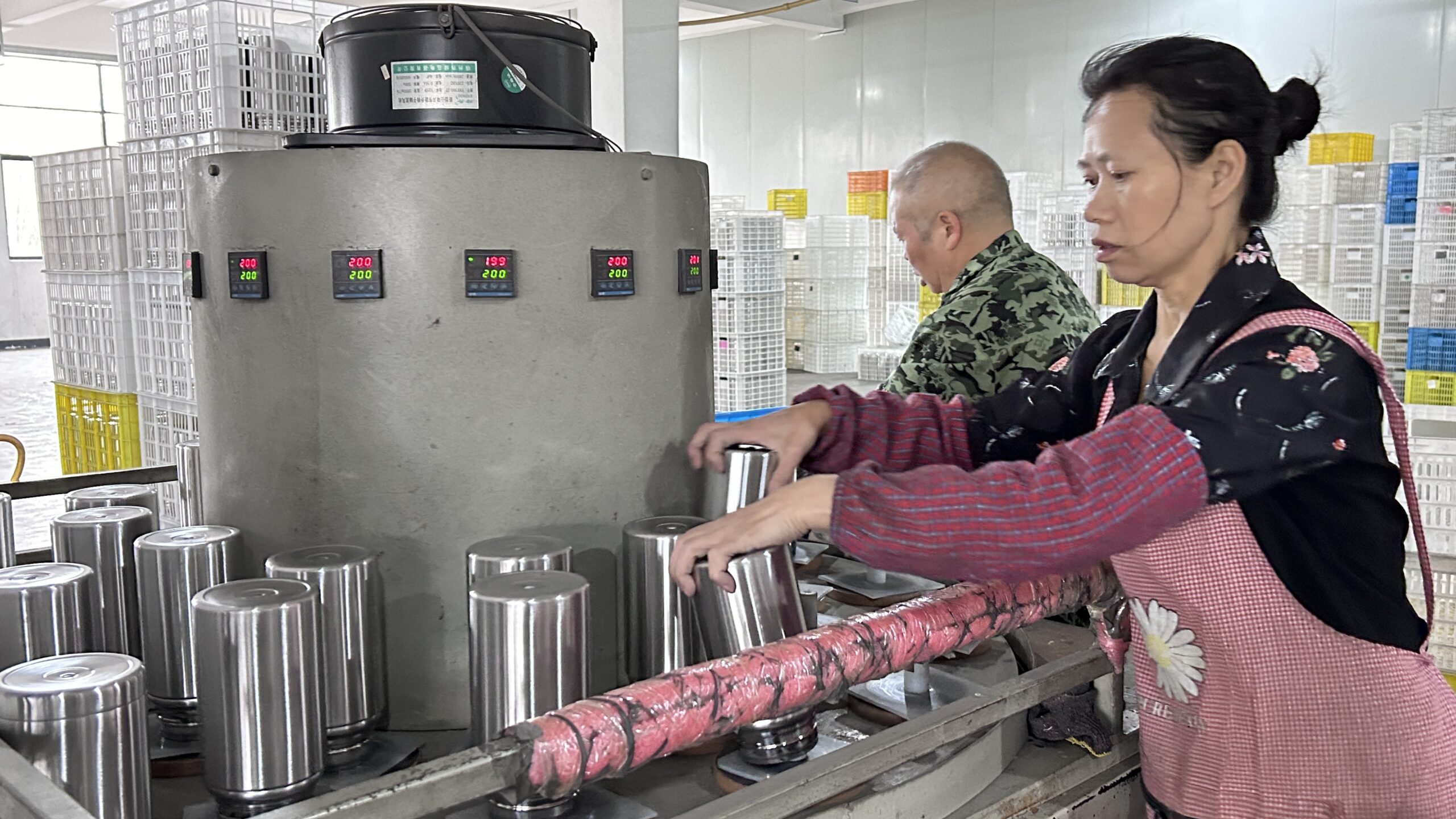
Insulated bottle thermal performance: key takeaways
- Test the final production bottle and lid.
- Use the same fill volume and starting temperature.
- Record ambient conditions and elapsed time.
- Compare each capacity separately.
- Link claims to the tested SKU and method.
Why thermal results vary
Capacity, surface area, bottle opening, lid construction, fill level and vacuum quality influence heat transfer. Opening the lid during testing changes the result. A narrow-mouth 500 ml bottle and a wide-mouth 1,200 ml model should not share one unsupported claim.
Create a repeatable test method
| Parameter | Record | Reason |
|---|---|---|
| Product | SKU, capacity, lid and batch | Identifies the tested article |
| Liquid | Type, fill volume and start temperature | Controls thermal mass |
| Environment | Ambient temperature and airflow | Controls external conditions |
| Timing | Closure and measurement time | Defines duration |
| Instrument | Thermometer ID and method | Supports repeatability |
| Sonuç | Temperature at each interval | Creates a usable curve |
Use samples to confirm production direction
Test development samples before mass production and compare pre-shipment samples with the approved target. If results fall outside the agreed range, investigate vacuum integrity, lid assembly, test method and component changes.

Write responsible product claims
Use language that identifies the tested model and conditions. Avoid turning the best laboratory observation into a guarantee for every use. Consumer behaviour, opening frequency, fill level and outdoor temperature affect real performance.
Distributors should retain test reports and update marketing if the product or lid changes.
How Diller supports thermal quality
Diller’s factory process and quality controls can connect sample testing, production checks and final inspection. Buyers should agree the thermal target and method for each SKU. This evidence-led approach supports Diller’s quality positioning without relying on vague premium claims.
Thermal test reporting checklist
- Photograph and identify the product, lid and batch.
- Record calibrated or verified measuring equipment.
- Measure actual fill volume instead of estimating by capacity name.
- Record initial, intermediate and final temperatures with time.
- Keep the bottle closed between defined measurements.
- Repeat enough samples to detect an isolated vacuum failure.
- Separate hot-retention and cold-retention protocols.
- State clearly whether preheating or precooling was used.
When comparing suppliers, use the same protocol and similar product geometry. If one result is unexpectedly strong or weak, repeat the test and inspect the unit for vacuum loss, lid differences or measurement error. Keep raw results, not only a pass/fail summary.
Sıkça sorulan sorular
What is a good heat-retention result?
The appropriate target depends on product design, capacity and intended use. Compare products under the same method and set an acceptance requirement based on the selected model and market promise.
Should the bottle be preheated before testing?
Use whichever method is agreed, but record it consistently. Preheating can change the result, so tests with and without preheating are not directly comparable.
Can cold retention use the same test?
The same control principles apply, but initial temperature, ice, condensation and measurement method need their own definition.
Make every thermal claim reproducible
Insulated bottle thermal performance becomes useful to B2B buyers when the result can be repeated. Define the conditions, test the final configuration and connect marketing claims to the exact evidence.
See how Diller makes insulated bottles veya request product-specific test information.