
Jawaban cepat: Pencetakan logo botol air harus dipilih sesuai dengan bahan botol, penyelesaian permukaan, karya seni, jumlah warna, ketahanan yang diperlukan, dan kuantitas pesanan. Pengukiran laser menciptakan tanda permanen pada permukaan logam yang sesuai. Cetak saring cocok untuk grafis warna spot sederhana, sedangkan transfer panas dan decal transfer air dapat mereproduksi karya seni yang lebih kompleks. Pembeli harus menyetujui dekorasi aktual pada penyelesaian botol akhir sebelum produksi massal.
Panduan ini ditujukan untuk distributor, merek label pribadi, perusahaan produk promosi, dan pembeli korporat yang membandingkan metode branding untuk peralatan minum dalam jumlah besar. Ini menjelaskan cara memilih proses, menyiapkan karya seni, dan menyetujui sampel tanpa menganggap biaya dekorasi terendah sebagai satu-satunya keputusan.
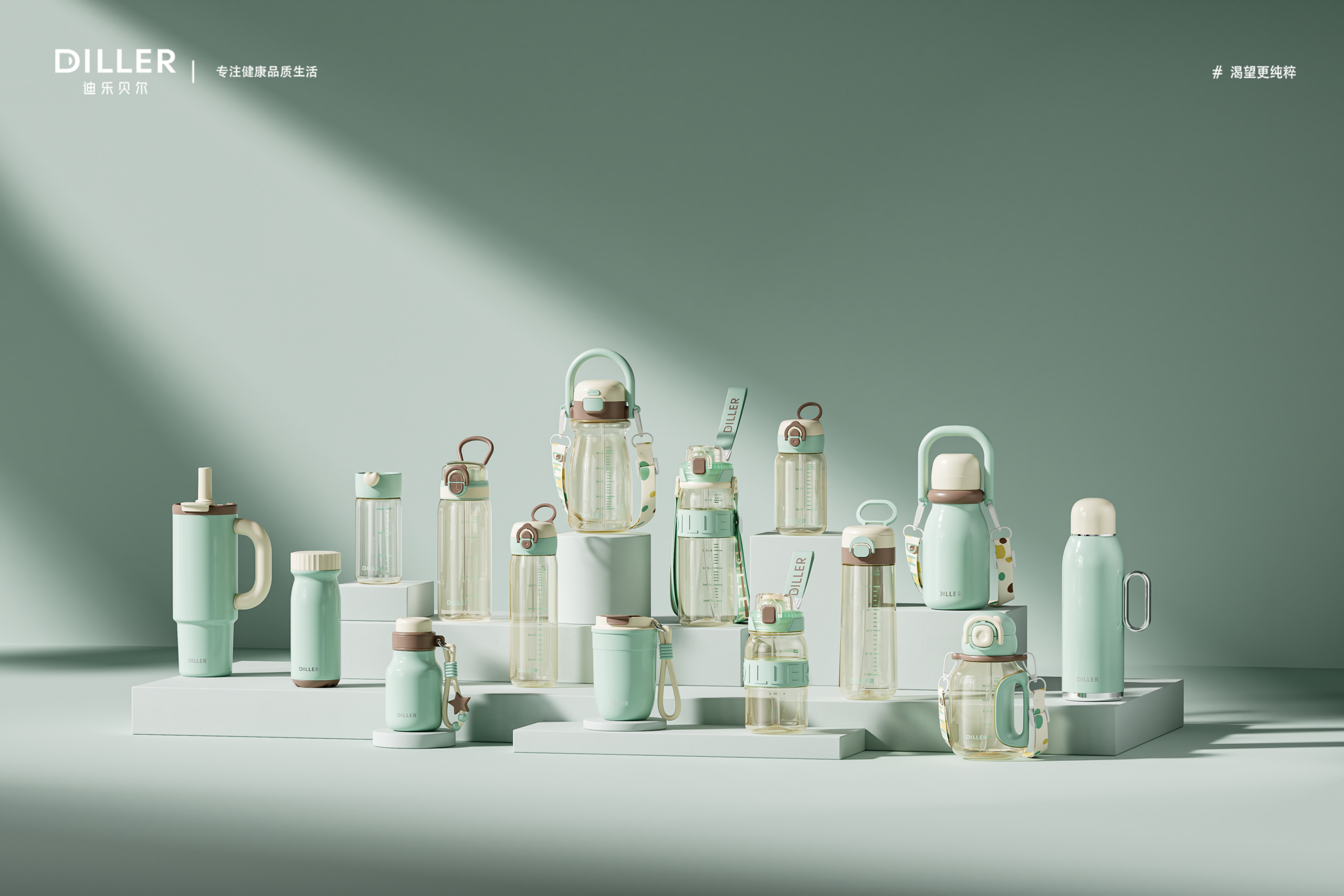
Poin penting pencetakan logo botol air
- Pilih proses dekorasi setelah mengonfirmasi bahan botol dan lapisan permukaan akhir.
- Gunakan karya seni vektor dan tentukan ukuran, posisi, orientasi, dan referensi warna secara tertulis.
- Laser, cetak saring, cetak transfer, dan stiker memecahkan masalah desain yang berbeda.
- Mock-up digital berguna untuk penempatan, tetapi sampel fisik adalah referensi produksi.
- Ketahanan harus diuji pada botol berdekorasi yang lengkap, bukan diasumsikan dari nama prosesnya.
Bagaimana seharusnya pembeli memilih metode pencetakan logo botol air?
Metode yang benar adalah metode yang dapat mereproduksi karya seni yang disetujui secara konsisten pada permukaan botol yang dituju dalam kondisi penggunaan produk yang diharapkan. Mulailah dengan substrat dan lapisan. Baja tahan karat, lapisan bubuk, plastik, silikon, kaca, dan permukaan berlapis keramik tidak merespons panas, tinta, tekanan, atau energi laser dengan cara yang sama.
Selanjutnya, tinjau karya seni. Wordmark satu warna memiliki persyaratan yang berbeda dari gradien fotografi, pola melingkar, atau hadiah bernama individu. Terakhir, tentukan ekspektasi kinerja. Botol acara promosi dan koleksi ritel untuk penggunaan sehari-hari mungkin memerlukan pengujian ketahanan abrasi, mesin pencuci piring, dan ketahanan kimia yang berbeda.
Metode pencetakan logo botol air dibandingkan
| Method | Paling cocok untuk | Kekuatan utama | Titik persetujuan utama |
|---|---|---|---|
| Pengukiran dengan laser | Badan logam yang sesuai dan beberapa lapisan akhir berlapis | Tanda permanen dan presisi tanpa tambahan tinta | Kontras dan efek pengukiran pada penyelesaian aktual |
| Sablon | Logo sederhana dan warna spot terbatas | Branding yang efisien dan dapat dikenali di area yang sesuai | Ketahanan tinta, definisi tepi, dan warna |
| Transfer panas | Grafik multiwarna dan area dekorasi yang lebih luas | Reproduksi warna yang detail | Distorsi karya seni, sambungan, dan ketahanan |
| Decal transfer air | Bentuk, pola, dan permukaan melengkung yang kompleks | Dapat mencakup area yang sulit untuk pencetakan datar | Tepi film, posisi, dan lapisan pelindung |
| Pencetakan UV | Grafik detail pada permukaan yang kompatibel | Detail halus dan warna variabel | Persiapan permukaan dan ketahanan abrasi |
| Embossing atau logo cetakan | Proyek plastik kustom, silikon, atau perkakas | Logo menjadi bagian dari komponen | Perkakas, draf, kedalaman, dan kemampuan pembersihan |
Tidak ada metode yang secara otomatis premium dalam setiap situasi. Pengukiran laser mungkin terlihat sederhana dan tahan lama, namun tidak dapat mereproduksi setiap warna merek. Proses transfer dapat mereproduksi karya seni yang kompleks, meskipun memperkenalkan lebih banyak variabel dalam film, panas, posisi, dan penyelesaian. Pembeli harus membandingkan hasil akhir, bukan hanya nama prosesnya.
Oleh karena itu, pencetakan logo botol air harus dikutip berdasarkan satu brief dekorasi yang disetujui. Harga tingkat metode tanpa informasi ukuran karya seni, jumlah warna, dan permukaan bukanlah penawaran yang dapat dibandingkan.
Pengukiran laser untuk botol logam berinsulasi
Pengukiran laser menghilangkan atau mengubah permukaan untuk membuat tanda yang terkendali. Ini bekerja dengan baik untuk teks, serialisasi, grafis garis, dan logo di mana pencocokan warna tidak diperlukan. Namun, hasil visual tergantung pada logam, ketebalan lapisan, pengaturan laser, dan detail karya seni.
Minta pemasok untuk mengonfirmasi apakah tanda tersebut mengekspos logam, mengubah warna lapisan atau menghasilkan efek lain. Garis yang sangat tipis dan teks terbalik kecil mungkin kehilangan definisi. Oleh karena itu, sampel yang disetujui harus menetapkan kontras, kualitas tepi, dan posisi yang dapat diterima.
Cetak saring untuk logo botol kustom sederhana
Screen printing is often practical for one or a few spot colours on a suitable print area. It can produce strong brand visibility without covering the complete bottle. Nevertheless, curved bodies, tapered walls, textured powder coating and seams can limit the usable area.
Define the ink system, pre-treatment and curing process for the selected substrate. Moreover, test the finished decoration for adhesion and abrasion. A process that works on smooth stainless steel may need adjustment on a textured coating or plastic component.
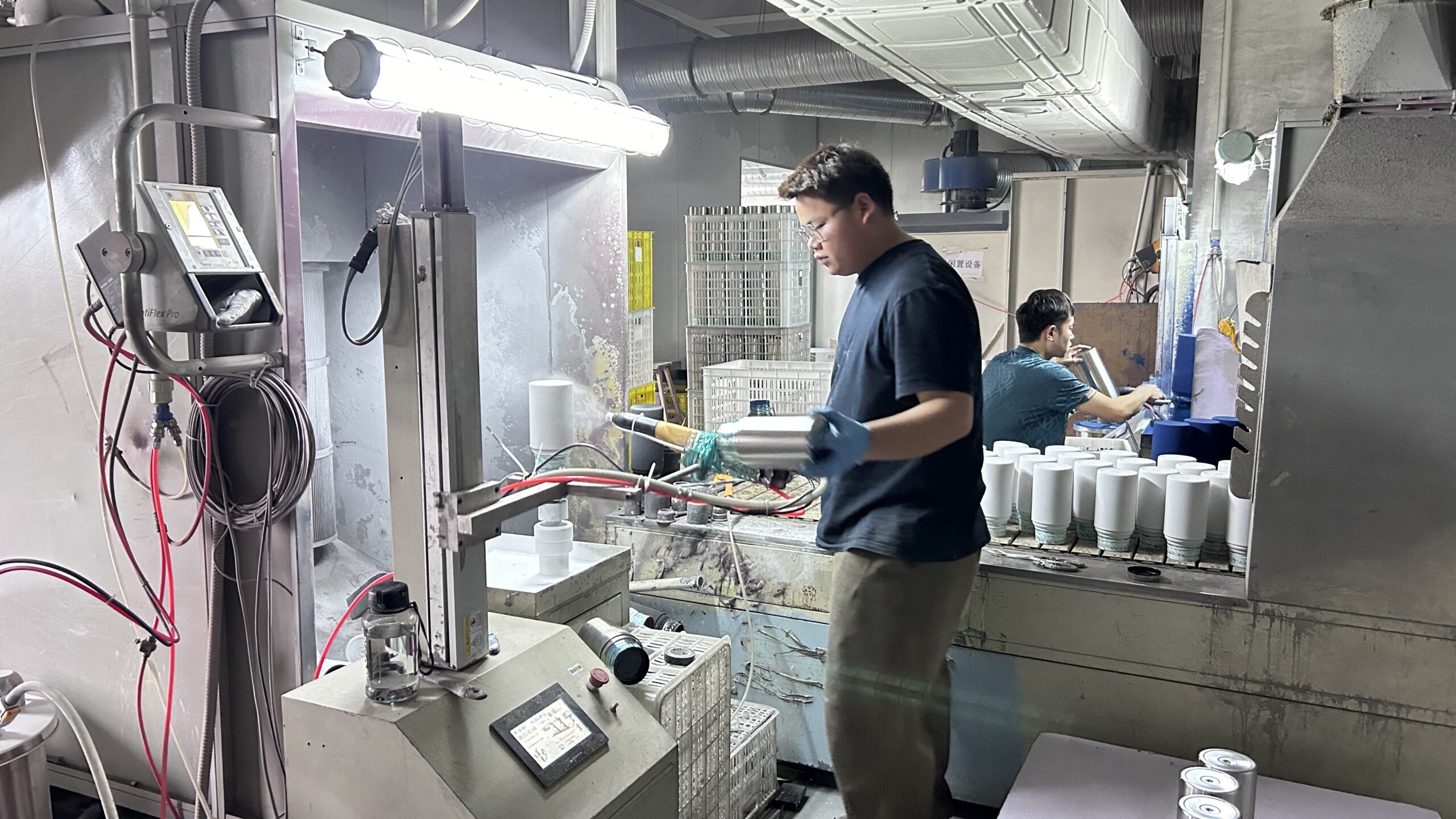
Transfer and decal methods for detailed graphics
Heat-transfer and water-transfer processes are useful when the artwork contains multiple colours, gradients or a larger pattern. They can also support decoration around curved areas. However, the artwork may stretch or change visually when transferred from a flat file to a three-dimensional bottle.
Review where the pattern begins and ends, how it aligns with the lid and handle, and whether a visible seam is acceptable. The protective top layer, curing conditions and intended washing method should also form part of the approval specification.
Prepare artwork and colour references
Supply editable vector artwork where possible, with fonts converted to outlines. Record the logo width and height in millimetres, the distance from a stable reference point and the viewing orientation when the lid is closed. If the bottle has a handle, straw or front face, define which direction is considered the front.
For spot colours, specify the appropriate Pantone reference and provide a physical reference when colour is critical. Pantone explains that colour appearance changes across materials and finishes. Consequently, an on-screen colour or a code alone cannot guarantee an identical result on powder coating, ink, silicone and packaging.
- vector logo file and approved version;
- logo dimensions and print location;
- Pantone or other agreed colour reference;
- minimum line width and text size;
- front orientation and distance from edges;
- acceptable colour and position tolerance;
- required personalisation or variable data.
Approve the logo on the actual bottle
A digital rendering can confirm approximate scale and placement. It cannot prove ink adhesion, laser contrast, film edges, gloss, texture or real colour. For that reason, approve a decorated physical sample made with the intended bottle material and finish whenever the visual or durability risk is material.
Photograph the sample, identify its SKU, artwork version, colour, process and approval date, then retain a reference. If the buyer approves only part of the sample, record that limitation. For example, a print-position sample does not automatically approve the bottle’s leakage or thermal performance.
Inspect water bottle logo printing in bulk production
Bulk inspection should compare production with the approved sample and written artwork specification. Review the logo under consistent lighting and at an agreed viewing distance. In addition, check both appearance and basic adhesion according to a method agreed before production.
The water bottle logo printing record should identify the production batch, artwork version and inspected quantity so that any corrective action can address the right goods.
| Inspection point | What to check | Typical defect risk |
|---|---|---|
| Position | Height, rotation and alignment | Logo appears tilted or off-centre |
| Colour | Approved physical reference and tolerance | Batch or component mismatch |
| Edges | Line definition and complete coverage | Blur, pinholes or missing ink |
| Permukaan | Scratches, contamination and film edge | Visible rework or poor preparation |
| Adhesion | Agreed rub, tape or wash method | Peeling or premature wear |
| Artwork | Correct version, spelling and orientation | Wrong logo or obsolete file |
Decoration applied away from the drinking surface still needs a product-specific compliance review. The U.S. Food and Drug Administration notes that colourants, adhesives and other substances applied to packaging surfaces can fall within food-contact considerations depending on their use. Buyers should review the complete article and intended conditions, not assume that every ink is suitable for every bottle.
How Diller manages custom bottle branding
Diller supports laser engraving, screen printing, water-transfer, heat-transfer and other project-specific decoration options. The recommended route begins with the selected SKU, surface finish and artwork rather than a generic logo price. This helps the buyer compare achievable appearance, sample needs and production controls.
For new projects, Diller can connect product selection, 2D or 3D design, sample development, packaging and mass-production review through its brand + supply chain + factory model. Buyers should request a project quotation because process, colour count, decoration area, quantity and quality standard all affect the final scope.
Pertanyaan yang sering diajukan
Which water bottle logo printing method is most durable?
Laser engraving creates a permanent mark on suitable surfaces, but “most durable” depends on the substrate, coating and required appearance. Printed methods can also perform well when surface preparation, ink, curing and protective finish are correctly specified and tested on the finished bottle.
Can a full-colour logo be printed on an insulated bottle?
Yes, on compatible surfaces using processes such as heat transfer, water-transfer decal or UV printing. The best choice depends on artwork detail, bottle shape, decoration area and durability target. Approve a physical sample because gradients and colours can change across materials and finishes.
What artwork file should a buyer provide?
An editable vector file is preferred for most logos. Convert fonts to outlines and include the approved logo version, dimensions, print location and colour references. High-resolution raster artwork may be needed for photographic graphics, but the supplier should confirm resolution and colour requirements.
Does a logo sample approve the whole product?
No. A decoration sample proves only the items recorded in its approval scope. Leakage, thermal performance, materials, packaging and other functions require separate specifications and acceptance checks.
Choose the method by evidence, not by name
Water bottle logo printing works best when the buyer defines the surface, artwork, position, colour, performance and inspection method before production. Compare real decorated samples, document the approved version and inspect bulk output against the same reference. This approach protects brand consistency while allowing the supplier to recommend the process that fits the product.
Review Diller’s panda meng lan, explore our custom product development service, read the sample approval checklistatau discuss a logo project with Diller.